
Acute Diarrhoea & Food Poisoning in Phuket
Don't Let Stomach Problems Ruin Your Phuket Trip
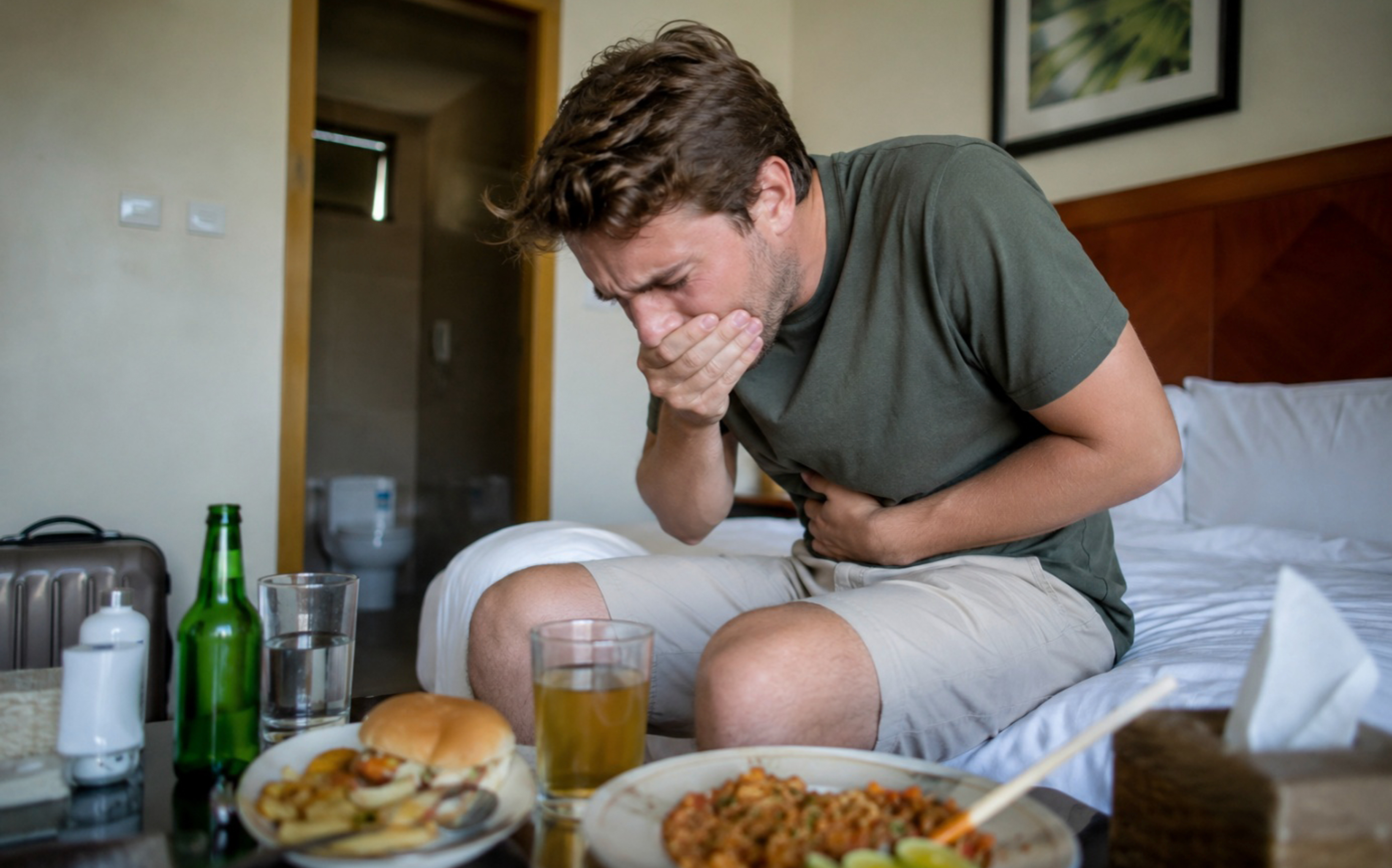
Acute diarrhoea and food poisoning are among the most common illnesses affecting travelers in Phuket. While most cases are mild and resolve within a few days, some can lead to severe dehydration and require medical treatment.
Early assessment and proper hydration are key to a fast recovery.
What Causes Acute Diarrhoea and Food Poisoning?
Acute Diarrhoea
Acute diarrhoea is defined as passing loose or watery stools three or more times per day, usually lasting less than 14 days.
Food Poisoning
Food poisoning occurs after consuming food or water contaminated by bacteria, viruses, parasites, or their toxins. Symptoms often develop within a few hours to two days after exposure.
Common causes include:
- Contaminated food or water
- Improper food handling
- Raw or undercooked seafood
- Street food stored at unsafe temperatures
- Viral or bacterial infections
Common Symptoms
Symptoms may include:
- Frequent loose or watery stools
- Abdominal cramps
- Nausea and vomiting
- Loss of appetite
- Bloating or excessive gas
- Fatigue and weakness
- Mild fever
- Signs of dehydration
Most uncomplicated cases improve within 3–5 days with rest and adequate fluid replacement.
Warning Signs: When to See a Doctor
Seek medical attention immediately if you experience:
- Blood or mucus in the stool
- Fever above 38.5°C (101°F)
- Severe abdominal pain
- Persistent vomiting
- Symptoms lasting longer than 3 days
- Signs of dehydration
- Jaundice (yellow skin or eyes)
- Confusion, extreme weakness, or drowsiness
Infants, elderly patients, pregnant women, and individuals with weakened immune systems should seek medical advice early.
Signs of Dehydration
Dehydration is often the most serious complication of diarrhoea and food poisoning.
Mild to Moderate Dehydration
- Increased thirst
- Dry mouth
- Reduced urination
- Dark urine
- Dizziness
Severe Dehydration
- Very little or no urine output
- Rapid heartbeat
- Confusion
- Fainting
- Extreme weakness
Severe dehydration may require IV fluid therapy.
Treatment Options
Treatment depends on the cause and severity of symptoms.
Mild Cases
- Oral rehydration solution (ORS)
- Adequate rest
- Light, easy-to-digest foods
- Avoid alcohol and greasy meals
Moderate to Severe Cases
- Doctor consultation and examination
- Stool testing when necessary
- Prescription medications
- Antibiotics for specific bacterial infections
- IV hydration therapy for dehydration
The Golden Rule for Travelers
"Cook it, Peel it, Boil it — or Forget it."
To reduce your risk of food poisoning:
✅ Eat freshly cooked food served hot
✅ Drink bottled or purified water
✅ Peel fruits yourself
✅ Wash hands before eating
❌ Avoid untreated tap water
❌ Avoid raw or undercooked seafood
❌ Avoid food left sitting out for long periods
❌ Be cautious with ice from unknown sources
IV Hydration for Faster Recovery
Vomiting and diarrhoea can cause fluid and electrolyte loss faster than the body can replace them naturally.
IV hydration may help patients recover more quickly by restoring:
- Fluids
- Electrolytes
- Energy levels
- Overall well-being
Many patients experience noticeable improvement within a few hours after treatment.
Acute Diarrhoea & Food Poisoning Treatment in Phuket
At Pro Medical Clinic Phuket, we provide rapid assessment and treatment for travelers and residents experiencing diarrhoea, food poisoning, dehydration, and gastrointestinal infections.
Our services include:
- Medical consultation
- Stool testing
- Prescription treatment
- IV hydration therapy
- Travel health advice
Walk-in appointments available daily.